Joseph Albert
Live on Fortnite · Island code 9437-8835-2792
Roombreakers
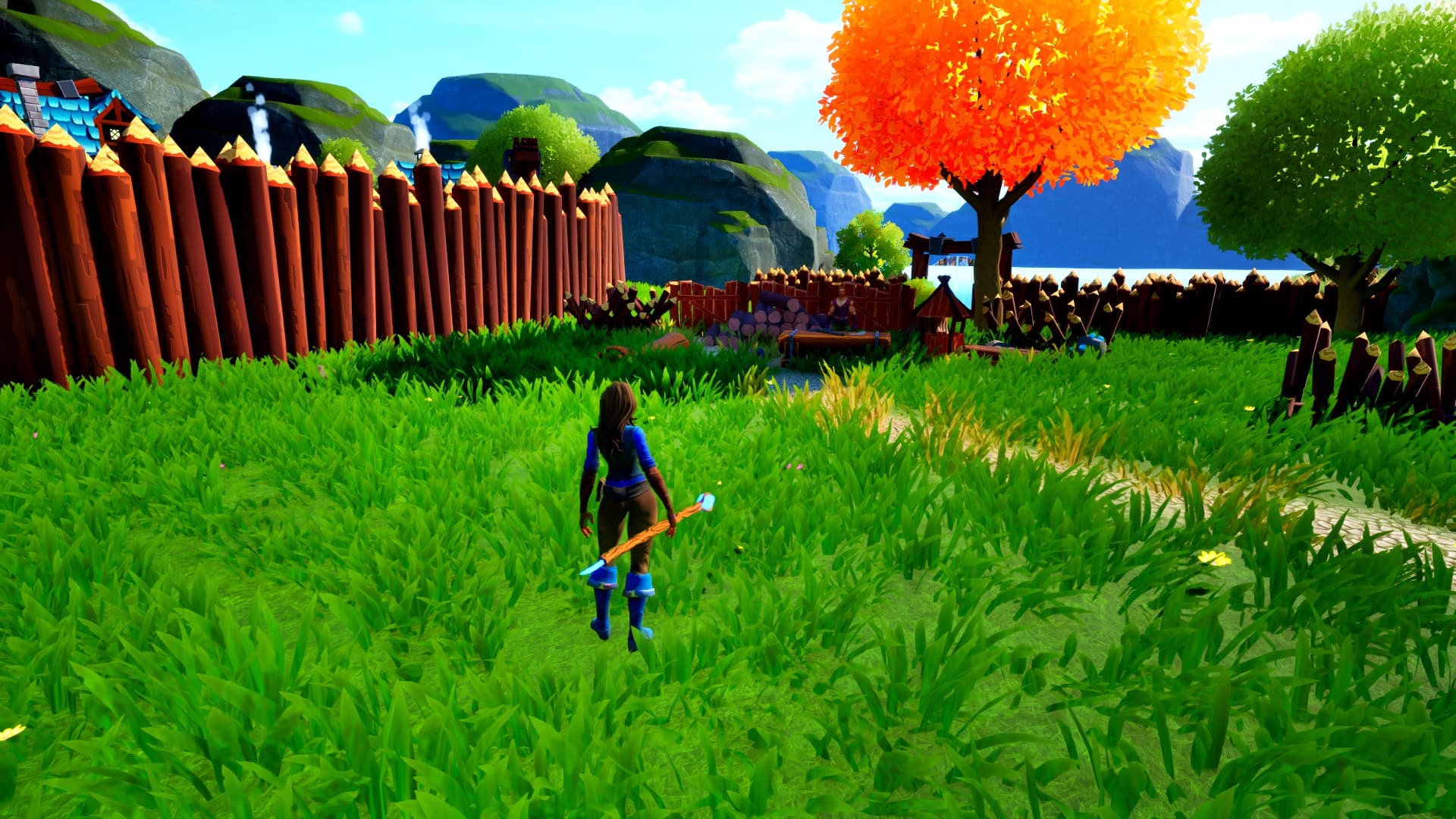
A co-op roguelike island for Fortnite. Pick a door, break the room, take a power and go again, alone or with up to three friends. I designed and built it on my own in Unreal Editor for Fortnite, from the Verse code to the key art and trailer.
- Role
- Solo designer and developer
- Built with
- Unreal Editor for Fortnite and Verse
- Players
- 1 to 4, co-op
- Status
- Live since November 2026, rated Teen
Featured by Epic Games
Live on Epic’s showcase.
Roombreakers started as my project for Epic Games’ UEFN Student Bootcamp. On 3 November 2026 it was one of five student islands in the Bootcamp Project Showcase, streamed live on the Unreal Engine Twitch and Fortnite Create YouTube channels.
I demoed a run and talked through how the game was made with hosts Dan Hutnik and Matthew Zanazzo, who singled out the UI.
Watch on YouTube from my segment →Overview
Pick a door. Break the room.
Every run is endless. Your squad votes on one of two doors, survives a 60-second horde room, takes a boon and spends its gold in the Market. Every sixth room is a boss fight in the Colosseum. Then the loop starts again, harder, until the whole squad is eliminated.
Boons stack into builds: six elements, duo boons that unlock when two elements meet, and one-time weapon evolutions. Account levels carry over between runs and unlock more of the game.
I built it between August and November 2026 and shipped it to every platform Fortnite runs on.
The run loop
Six steps, repeated until the last player standing goes down.
- Vote on a doorTwo named rooms, each with its difficulty, danger and reward. The squad votes with player portraits and the majority wins.
- Survive the roomSixty seconds against a horde that keeps speeding up. Elim streaks build a gold multiplier, and coins fly to whoever made the elim.
- Take a boonOne of three powers for the rest of the run, or skip it for gold.
- Shop the MarketWeapon upgrades, new guns, evolutions, heals and run items, at prices that climb as the run goes on.
- Beat the bossEvery sixth room, one of three bosses waits in the Colosseum.
- Go againEverything scales up: enemy health, enemy counts and boss damage.
Builds and enemies
The systems that make no two runs play the same.
Six elements, seven duos
Frost, Spark, Sun, Wind, Crystal and Bubble, each with a base boon and an amplifier. Hold two element tags and duo boons like Superconductor and Supernova start to appear.
Twenty evolutions
One-time Market buys on a holofoil card that change how a gun plays, from Double Tap and Chain Spark to Lifesteal and Last Stand.
The Market
A shelf rolled once per visit. Upgrades are the only way up the rarity ladder, beside exotic guns, real Fortnite consumables, rerolls and run items like a Piggy Bank that pays interest.
Enemy roles and elites
Rushers chase, Heavies soak damage, Bombers blow up once eliminated and Shooters hold a spot in front of you. In hard rooms, elites glow purple with one trait: Tough, Swift, Volatile or Mending.
Co-op for one to four
Enemy health, spawn rates and boss health scale for solo, duo, trio and squad. Knocked players can be revived, and late joiners drop into the run without stalling anyone.
Account progression
Account XP to level 20, saved between sessions. Each level unlocks something, from starting gold and a fourth boon card to the Neon City rooms.
Three bosses
Every move is telegraphed with a banner, a wind-up and a ground mark the size of the blast. At two thirds and one third health the boss shields up until its adds fall, and below a third it enrages.
Twenty rooms
Eighteen combat rooms in six themes, three tiers each, picked by how deep the run is. Plus the hub and a 520-piece Colosseum. Each theme has its own light and time of day.
Design process
Options first, every time.
Every screen began as a live HTML mock with four to twelve options side by side. I picked one, then rebuilt it in UEFN to match the mock pixel for pixel, measured in headless Chrome at the in-game UI scale.
The art direction came from Fortnite’s item shop: a rarity glow, big glossy icons and a chunky outlined name. Two rules came out of play-tests. No panels or modals, because they read as a website. And text always fits its box.
Even the card faces started as a picker of twelve WebGL shaders, written only in maths a UE material can reproduce. The pick, Aurora, became a UI material with a time offset per card, so no two cards ever animate in sync.
The boon screen
Twelve card styles compared, from candy jelly to comic burst. Loot Reveal won and set the look of the whole game.
Mock In game The door vote
Seven layouts tested, including a travel poster and a scout map. Big Split won: two slanted room photos fill the screen and the squad votes with portrait medallions.
Mock, with early room names In game The welcome screen, and a new name
Twelve ways to show three steps, and Pedestal won. The mock still carries the working title, Endless Rooms. A naming study of 22 candidates led to Roombreakers.
Mock, as Endless Rooms In game
Tech and pipeline
How it was built.
- Verse
- 24 files and about 16,900 lines: a run director, a card and prompt UI framework, weapons and the Market, bosses, elements, enemy roles, progression, music and late-join handling.
- UI in UMG and MVVM
- The first UI ran in Verse and animated on the server, which lagged. I moved it all to 20 UMG widgets bound to Verse fields, animated on the client, with 14 custom UI materials that draw in design pixels and stay aligned at any HUD scale or at 4K.
- Editor automation
- I drove the editor through UEFN’s MCP server and a Python sidecar: placing and wiring devices, building widgets and their bindings, authoring materials node by node and generating 25 Niagara systems from scripts.
- Rule-checked rooms
- Rooms are written as small ASCII maps and built from Fortnite kit pieces. A checker enforces ten arena rules first, from exits and stair widths to keeping the two rows nearest the camera clear, and refuses to build a room that fails.
- Boss animation in Python
- Twelve animations posed with a small IK rig in Python, previewed as stick-figure sheets, then baked into Unreal animation sequences that land on each move’s beat.
- Key art, flyovers and trailer
- Key art posed by script in Blender with real Fortnite skins. UEFN has no Movie Render Queue, so each room flyover was stepped one frame per editor tick and cut with Python and ffmpeg. The trailer was edited in Remotion.
- Lines of Verse
- 16.9K
- Niagara systems
- 25
- Weapon evolutions
- 20
- Account levels
- 20
Key art and animation
Rendered in Blender from a scripted pose library. The Colosseum overlook took four versions to become the store art.
Shipping
What launch taught me.
- The age rating
- The first questionnaire returned E10+, and Epic rejected the island and the trailer: a shooter against Fortnite characters has to rate the way Fortnite does. I retook it with the knocked-down crawl and the trailer’s close-ups declared, and no blood. It came back Teen and PEGI 12.
- Banned assets
- Some kit pieces and skins spawn fine in the editor but fail upload. I traced each one through the upload logs and swapped it, which is why The Meltdown wears Hazard Agent.
- Platform limits
- No custom fonts, so every word is Burbank. Verse can’t change fire rates, so reload evolutions swap Class Designer loadouts. There is no slider widget, so music volume uses buttons.
Credits
Who made what.
- Design, code, levels, UI, key art and trailer
- Joseph Albert (JAF)
- AI pair-programmer
- Claude Code by Anthropic, for Verse, editor automation, tool scripts and design mocks
- Music
- “Be Electro” by Infraction and “Fight 76” by PremiumBeat, licensed through Envato Elements
- Icons
- game-icons.net under CC BY 3.0, by Lorc, Delapouite, Skoll, sbed, Carl Olsen, Zeromancer and guard13007
- Fortnite
- Fortnite, its characters, weapons, items, the Burbank font and UI are © Epic Games. Made with Unreal Editor for Fortnite.